Presidenciais 2026: Surprising Turns and Historic Milestones in Portugal's Election
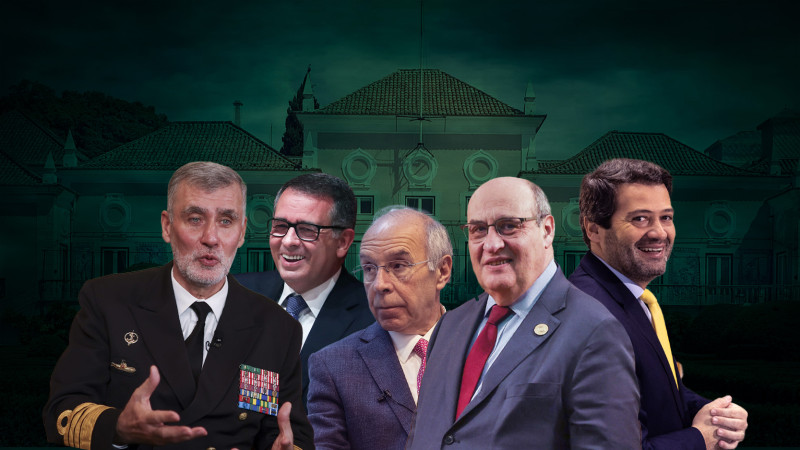
Portugal's presidential election of 2026 has marked a significant turning point in the country's political landscape, with the first round of voting concluding on January 18, 2026. One of the defining features of this election is the absence of the incumbent president, Marcelo Rebelo de Sousa, who is constitutionally barred from running for a third consecutive term. This absence, coupled with the rise of far-right and center-left candidates, has set the stage for a highly charged political environment.
In the first round, Antonio Jose Seguro, a moderate Socialist candidate, emerged as the leading contender. According to exit polls and initial results, Seguro secured a surprising 30.1% of the votes, surpassing pre-election projections. This outcome was particularly noteworthy because it marked a significant deviation from the predictions, where André Ventura, the leader of the far-right Chega party, was expected to lead. Ventura's strong showing, with 28.1% of the votes, further underscored the growing influence of far-right politics in Portugal, which has been a notable trend across Europe in recent years.
The tight race between Seguro and Ventura has sparked intense debate and analysis, as both candidates represent starkly different political ideologies. Seguro's victory in the first round has been hailed as a testament to the enduring strength of the center-left in Portugal, despite the mounting challenges from both the far-right and center-right. Ventura's performance, however, signals a growing shift towards populist and nationalist sentiments among Portuguese voters, a phenomenon that has been observed in other European countries as well.
As the election progresses to the second round, scheduled for February 8, 2026, the spotlight remains on the potential impact of these two candidates on Portugal's future. Both candidates have vowed to continue their campaigns with renewed vigor, each aiming to capture the majority of the undecided votes and those who supported other candidates in the first round. The second round is expected to be a closely contested battle, with significant implications for the political direction of Portugal in the coming years. The outcome will determine whether the country will continue on a path of progressive reform or experience a shift towards more populist and right-wing policies.
The historic nature of this election cannot be overstated. The rise of far-right politics in Portugal, as seen in the strong showing of André Ventura, represents a new chapter in the country's political history. While the final outcome of the second round remains uncertain, it is clear that the 2026 presidential election has already left an indelible mark on Portugal's political landscape. The next few weeks will be crucial as the country prepares for the decisive second round, with all eyes on the evolving dynamics and the eventual victor who will shape the future of Portugal.
Cet article vous inspire…
 À suivre · PolitiqueLe Roi Mohammed VI du Maroc : Un Règne de Projection Nationale et Mondiale