Trump and Greenland: A Continuing Saga of Territorial Ambitions

Greenland has once again found itself at the center of international political intrigue, as former U.S. President Donald Trump has reignited his interest in acquiring the world's largest island. This development has sparked outrage in both Denmark and Greenland, leading to a complex web of diplomatic tensions and strategic considerations.
Trump's fascination with Greenland is not new. His administration has long expressed interest in acquiring the territory, citing national security and geopolitical interests. In 2019, Trump even went so far as to suggest that the U.S. might "get" Greenland, a statement that was met with widespread surprise and indignation. His recent revival of this proposal has further escalated tensions, with Danish officials firmly rejecting the idea of any U.S. annexation.
In a notable incident, Trump appointed Louisiana's governor as a special envoy to Greenland, a move that was seen as a direct affront to Denmark's sovereignty over the territory. This decision was met with outrage from both Danish and Greenlandic officials, who vehemently opposed the idea of any U.S. interference. The Danish prime minister has been particularly vocal in her criticism, stating that the U.S. does not have the right to annex Greenland.
Trump's latest remarks have added fuel to the fire. During a recent interview, he hinted at a renewed interest in Greenland, suggesting that the U.S. would "be concerned" with the territory in about two months. This ambiguous statement has left diplomatic circles speculating about Trump's true intentions and the potential implications for Greenland's future.
As the tensions between the U.S., Denmark, and Greenland continue to escalate, the geopolitical landscape of the Arctic region is becoming increasingly complex. With the strategic importance of Greenland's natural resources and its potential role in global security, the future of this territory remains a hotly debated topic. Trump's continuing interest in Greenland highlights the ongoing debate over the island's sovereignty and its role in international politics.
Cet article vous inspire…
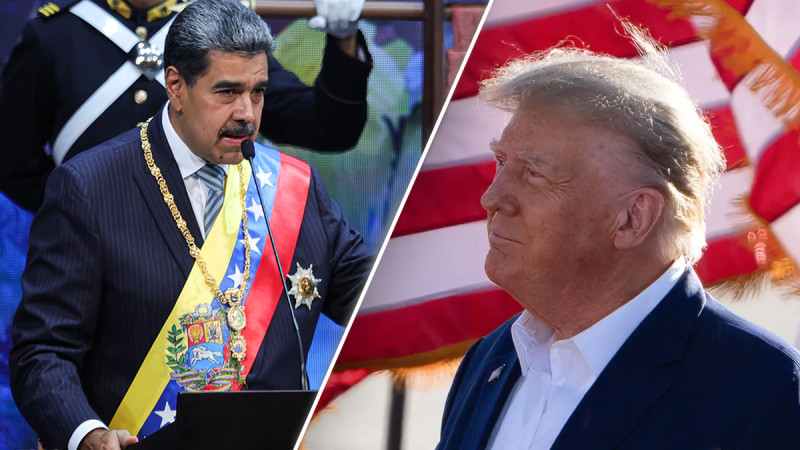 À suivre · PolitiqueLa capture de Nicolás Maduro par Donald Trump: Une opération controversée