Venezuelan Crisis and Trump's Escalation
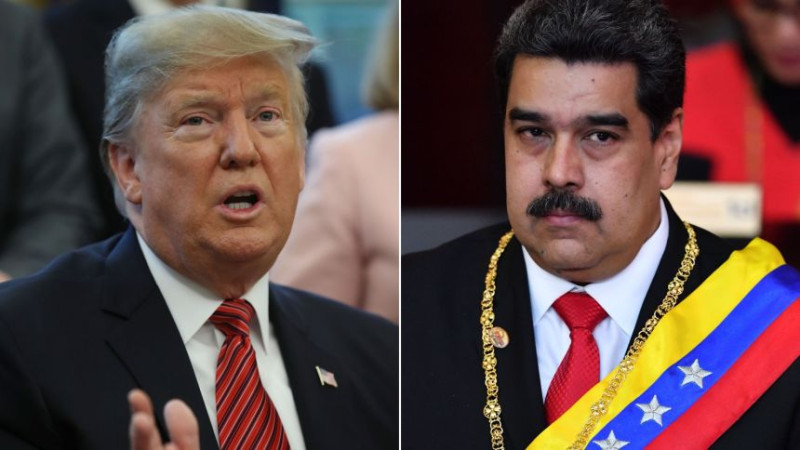
In a dramatic turn of events, the world is watching as tensions between the United States and Venezuela reach new heights. President Donald Trump has made some bold moves, including a covert operation that resulted in the capture of Venezuelan President Nicolás Maduro. This escalation has led many to question the future of U.S. and Venezuela relations and what this could mean for global stability and security.
President Trump recently announced that U.S. forces had carried out a "large-scale strike" against Venezuela, resulting in the capture and removal of President Nicolás Maduro and his wife. This move, a significant escalation, comes as part of a broader campaign against drug trafficking in the region. The operation, which was confirmed by the president, involved a covert strike and marked the first known land operation conducted by the U.S. in Venezuela. The administration has provided few details about the specific targets and methods used, but it is clear that this operation is part of a larger, more aggressive strategy against Maduro's regime.
The operation has sparked widespread debate and speculation. Some argue that this is a necessary step to combat drug trafficking and destabilize the Maduro regime, while others see it as a dangerous escalation that could lead to broader conflict. The international community has been quick to respond, with many countries expressing concern over the potential for further escalation and the impact it could have on the region. The Venezuelan government, for its part, has accused the U.S. of fabrication and has denied any involvement in drug trafficking, claiming the accusations are politically motivated.
In addition to the military operation, President Trump has also left the possibility of war with Venezuela on the table. This is a significant escalation that has raised alarms both domestically and internationally. The potential for a full-scale war between the two nations is a frightening prospect, given the current geopolitical landscape and the unstable situation in Venezuela. Some analysts have suggested that this could be a staging tactic to put pressure on Maduro's regime, but the risk of a broader conflict remains high.
Maduro, who has been a thorn in the side of the U.S. for years, has been accused of a range of crimes, including drug trafficking and human rights abuses. The U.S. has long maintained that Maduro's regime must be held accountable for these actions, and this operation is seen as a step in that direction. However, the capture and removal of a foreign leader is a highly unusual move and raises significant questions about the implications for international law and sovereignty.
As the world watches and waits, the implications of these developments are far-reaching. The U.S. has a history of involvement in Latin America, and this operation is just the latest chapter in a long and complex story. The future of U.S.-Venezuela relations remains uncertain, but one thing is clear: this escalation is a major turning point that will have lasting impacts on the region and the world.
Cet article vous inspire…
 À suivre · PolitiqueLes États-Unis capturent Nicolás Maduro : une nouvelle ère dans la crise vénézuélienne